
Introduction: PVC Steam Bending Chamber



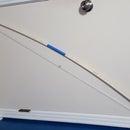
Steam bending is a woodworking technique where strips of wood are steam heated using a steam box. The applied heat and moisture makes the wood pliable enough to easily bend around a former to create a specific shape.The moulding process is usually done by clamping the strips of wood to a positive form, with the strips of wood often reinforced on the outside with a metal band to prevent blowout. The method has been used in the manufacturing of a diverse range of products, some examples being wooden boat building where it is used in the shaping of hull's ribs and lap boards, the production of traditional wooden lacrosse sticks, musical instruments such as violins and in the manufacture of wooden furniture
Step 1: Gathering the Supplies

1. Rockler Steam Bending Kit from amazon - Amazon 80.00$
2. Charlotte Pipe 4-in x 5-ft Sch 40 Cellcore PVC DWV Pipe - Lowes 12.87$
3. Acrylic Round Rod, UV-Resistant, Transparent Clear, Meets UL 94HB, 1/4" Diameter, 6' Length - Amazon 12.86$
4. DEWALT DWE6411K 1/4 Sheet Palm Grip Sander Kit - Amazon 49.99$
5. BLACK+DECKER LDX120C 20-Volt MAX Lithium-Ion Cordless Drill/Driver - Amazon 49.00$
6. DEWALT DW1354 14-Piece Titanium Drill Bit Set - Amazon 12.99$
7. (Common: 2-in x 4-in x 12-ft; Actual: 1.5-in x 3.5-in x 12-ft) Lumber - Lowes 7.05$
8. Stanley PowerLock 25 ft. Tape Measure - Lowes 8.25$
9. Deck Plus 365-Pack 3-in Flat-Head Ceramic Star-Drive Deck Screw - Lowes 25.61$
10. 3M Flat Temple Safety Glasses - Lowes 9.97$
Step 2: Preparing the PVC Pipe
PVC pipes like the one we used can be bought in most hardware stores, but we found our PVC Pipe on the side of the road, and we decided to refurbish it. We hosed down our pipe and found that the caps had been glued on. In order to thoroughly clean the pipes we would have to remove the caps. Since they were glued on tightly, we used a hammer and a flathead screwdriver to remove the caps by inserting the flathead in between the cap and pipe, then hammered away. Once the caps were removed, we finished washing it and used "Scotts Shop Rags" to dry it down.
Once the pipe was clean and the caps were removed, we used the sanding kit to sand the ends of the pipe. We sanded them down and then fit a store bought cap on them to see if more sanding was needed. Once the ends were sanded down enough, we fit one cap tightly and left the other one fit on enough to be easily removed, but also remain on the pipe.
Step 3: Drilling and Inserting the Acrylic Rods


The acrylic 1/4" Diameter, 6' Length rod were cut to be 6 inches long so that they could go all the way through the pipe and come through the other end. The drill hole was on the bottom side of the pipe to leave as much space for wood to be placed in side pvc pipe/chamber. Using our 1/4 drill bit to create 9 pairs of holes across from each other. The holes don't need to be much bigger than 1/4" inches because it would release the steam needed so wiggling around the hole with the drill will widen the hole just enough if to tight. After finding the perfect size for the whole, slide 6 inch piece in pvc pipe. If drilled unaligned, the process if putting acrylic piece in will be very difficult and could cause problems.
Step 4: Building the Wood Frame

Now that the steam bending chamber was complete, it needed something to rest on. During the steaming process, if the chamber moves, it could cause uneven distribution of the steam throughout the chamber. By having it on a stable base, it can have a set angle where the steam is distributed and steam the entirety of the wood.
Take a 6’ board of wood and cut it into 6 individual pieces, each 10” x 3” x 1.5”. These will become the supports for the chamber. Glue two of the boards together by the edge to make one 10” x 6” x 1.5” piece. Repeat. There should now be four total pieces, of which two are made from combined pieces.
Take the four pieces and use the cap from the chamber to trace onto the center of the pieces. On the first piece, make sure the tracing covers most of the board, leaving only ¾”, on the second, it should leave 1 ¼”. The double height support pieces will leave the most amount of space for the elevation. The first of these should leave 4 ¼”, and the second should leave 6”. Cut them out along those circular markings. We used the bandsaw for ours, but a handheld one might work better.
This is where the two 6’ x 1” x 1” pieces of lumber come into play. Line them up parallel to one another and place the four support pieces on them. The edges should line up and the pieces should all be spread apart by 18” with a couple inches left to each ends. Mark the sides where the supports rest on the bottom two pieces. Wrap the lines around the with pencil and mark a circle in the center. This will be where the screws will be drilled in.
Line everything up and rest the chamber on the supports. They should all touch the chamber. If necessary, correct any of the markings. Keep the supports in the proper order, with a straight inclined.
Flip the boards onto their back and line up the supports under them, according to the markings. Use a handheld drill and the 10 x 2 ½” tan screws and screw the beams onto the supports using the marked circles. Repeat this step with every piece, making certain that they are placed in the appropriate order.
With the wood foundation complete, the chamber can now rest permanently on the supports. The additional inches on the beams ends can work as handles so that the frame can be easily moved.
Step 5: Attaching the Steam Machine


After building the wood frame we decided to assemble the steam machine, now that the pipe is being supported we don’t have to worry about it warping again. Attaching the steam machine was in general easy. To attach it to the pipe you need to drill a hole for the adapter to be placed in, you can put the adapter on the side of the pipe to measure out how long you want to drill through. After marking the desirable length on the drill bit, proceed to drill. We recommend going in a little more than halfway just so it’s easier to unscrew the tube from the adapter, but whichever way you find to be of more convenience is the best way to go. After drilling the hole you want to put the adapter in slowly just to make sure the hole is the right size and not too loose so there’s no gap for the steam to escape or hole to tight since it can crack the pipe. Once the adapter is the perfect size you can then screw on the nut from the inside of the pipe and make sure it’s secure.
Once the adapter is secure you can take the black tunnel and screw it on. Once it is attached you can plug in your machine and watch the magic happen. For our machine, it took approximately an hour per 1’’ thickness of the wood.